
Current Psychology NEWS April, 2026 #HealthyMen—The Government of Canada is launching a national conversation on Men and Boys’ Health
Input gathered through this conversation will inform the development of Canada’s first Men and Boys’ Health Strategy, which will be released later in 2026.
How to take part:
Starting today, Canadians can learn more at Canada.ca/Healthy-Men.
Canadians can submit feedback directly through an online form on the same site.
The Canadian government invites everyone to join this conversation. Men, young adults, boys, partners, families, friends and communities can share their experiences and ideas. They also call on parliamentarians, provincial and territorial partners, community groups and organizations to engage in their communities and contribute perspectives, evidence, and solutions.
Having this conversation and sharing feedback will help shape a strategy that makes a real difference for the health and well-being of men and boys across Canada.
PSYCHOLOGY MONTH
This year’s Psychology Month extended a little beyond the end of February, and we are happy to share a few more articles and podcasts in case you missed them.
Job interviews and the hiring process with Dr. Nicolas Roulin and Madeline Springle
This is Psychology: HIV, AIDS, and healthcare inequity with Dr. Sean Rourke
A look back at Psychology Month and a look forward for psychology
Dr. Linda Iwenofu, the Chair of the CPA’s Black Psychology Section, wrote a tremendous article that was part of both Psychology Month and Black History Month:
Belonging on Purpose: A Black Psychological Lens on Racism in Canada
We’d like to thank the provincial organizations that worked incredibly hard during February to create Psychology Month content and amplify the campaign.
Manitoba Psychological Society – live webinars, a curated reading list, and a declaration from the Manitoba government
College of Psychologists of New Brunswick – many psychological facts and insights shared on their Facebook page throughout February
BC Psychological Association – launched a podcast hosted by Dr. Wolfgang Linden, and created features for their YouTube channel
Ontario Psychological Association – engaged Pollara Strategic Insights to survey Ontarians about their mental health in light of current events.
Thank you to all our partners for their hard work, to our members for their participation, and to all the psychologists and health professionals who gave their time to enhance the 2026 Psychology Month campaign. We are enormously grateful for your support!
SCIENCE
2026 Student Research Grant Winners Announced
The CPA is pleased to announce the recipients of this year’s student research grants. These grants recognize exceptional student research in all areas of psychology. This year, grants were provided by the CPA, jointly by the CPA and CSBBCS, and by BMS Canada. A full list of this year’s recipients can be found here.
Help Shape the CIHR Institute of Neurosciences, Mental Health and Addiction (INMHA) 2026-2036 Research Priority Plan
Via a survey, the INMHA is inviting input from the Canadian neuroscience, mental health, and addiction research community and stakeholders on areas that hold the greatest opportunity for scientific breakthrough and improving the health of Canadians. This survey will directly inform INMHA’s strategic priorities, future funding initiatives, and engagement and partnership approaches. To learn more or to complete the survey, click here.
PRACTICE
Joint ACPRO-CPA Summit
The Summit steering committee held its second meeting where it continued discussion of the focus and format of the Summit. A third meeting is planned for mid-April to formalize next steps.
EDUCATION
Lunchbox Lectures Season Wrap-Up
The final Lunchbox Lecture of the year wrapped up on March 27th with a presentation from Dr. Diana Cassie: “Toward an RTI Model for Supporting Gifted Learners in Canadian Schools”
Thanks to all of our speakers and those who attended the lectures throughout this year. We will resume the series in September, 2026. Calls for speakers for the series will open in July.
Courses Coming Soon
Stay tuned over the coming months for the launch of two new courses, developed in partnership with the CPA’s Family Psychology and Neuropsychology Sections.
An Introduction to Family Psychology is a 4 module, 4 CE credit course that provides psychologists with an introduction to family psychology, including family systems theory, family assessment, and more.
An Introduction to Clinical Neuropsychology is a 4 module, 4 CE credit course that introduces psychologists to core concepts in the area of clinical neuropsychology.
National Black Mental Health Conference
Don’t Miss Out: 3rd National Black Mental Health Conference (May 27–29, 2026)
Registration closes April 8!
Join us at the University of Ottawa for “Rooted in Legacy, Rising in Justice,” featuring a keynote by Dr. Wendi Williams,President of the American Psychological Association.
Connect with scholars and community leaders, explore emerging research, and advance social and racial justice in mental health.
Registration: https://nbmhc26.sciencesconf.

Informed Consent in Modern Psychological Practice: Ethics, Technology, and Accountability
Wednesday, April 29, 2026
10:00 AM – 1:00 PM MDT.
In the evolving landscape of psychology, consent has presented itself to be a lot more complex and sometimes hard to navigate. Join Dr. Mitch Colp. R.Psych in a discussion about the regulations and risks involved in applying ethical decision-making in your own practice. Deepen your understanding and feel more confident in your foundational ethics work.

MIND FULL
Jinn in the Family: Oral storytelling and cultural richness with Dr. Rehman Abdulrehman
Dr. Rehman Abdulrehman came back to the Mind Full podcast to talk about his new book – this time a work of fiction! Jinn in the Family tells the story of a family, originally from Zanzibar, and the Jinn that follows them throughout their lives as they move around the world – including to places like Winnipeg. The novel brings a psychological lens to the concepts of cultural resilience and family dynamics.

Bipolar disorder and a new health information tool with Dr. Kelsey Collimore
Mood disorders are complex, which means that both the diagnosis and the treatment can be complex. Such is the case with bipolar disorder, a mood disorder characterized by manic highs and depressive lows. Getting accurate, evidence-based information about the condition is essential, which is what led The Royal, a specialized mental health centre in Ottawa, to create a virtual health information tool for people living with the condition. Dr. Kelsey Collimore, the clinical psychologist who led this initiative, joins Mind Full to talk about it.
R2P2 AND INVITATIONS TO COLLABORATE
Inviting psychologists, counsellors, and other mental health professionals to participate because they are directly involved in the assessment and treatment of OCD. Exclusion criteria include: not a mental health care provider in Canada whose scope of practice does not include psychotherapy.
From Individual to Collective: Examining the Psychology of Safety
Recruiting:
– Psychologist in or outside Canada- Research or practice focused on at least 1 of the following:a. Safety and/or anxiety experiencesb. Community/collective wellbeingc. Psychological experiences in relation to systems/structures of power
Role of Parent-Child Pain Communication in Adolescent Dysmenorrhea
Recruiting people who:
– Live in Canada and speak English
– Youth: Aged 12-25, at least 3 regular menstrual cycles (21-35 days), and experience menstrual pain
– Parents: be the biological parent/legal guardian to the youth participant and living with the youth ≥50% of the time
Testing Interventions for Borderline Personality Disorder
Seeking both members of couples where: (a) one member of a couple has BPD or thinks they might (we will do assessments to confirm); (b) both members live in Ontario; and (c) both members are both above 18 years of age.
Recruiting parents and caregivers of young children, aged 18 or older, residing in Canada or internationally. Open to all gender identities and family structures.
GOVERNANCE
Congratulations to all 2026 CPA Award Winners and Elected Fellows!
Click here to see the full list of 2026 award recipients.
Dr. J. Philippe Rushton
Effective February 27, 2026, the Board of Directors of the Canadian Psychological Association has revoked the status of Fellow previously conferred on the late Dr. J. Philippe Rushton.
In exercising its authority to confer and withdraw honorary distinctions, the Board recognizes that Dr. Rushton’s published work on race and intelligence is fundamentally inconsistent with the established scientific evidence and ethical standards that guide the discipline of psychology. The CPA recognizes that his work advanced racist assumptions while presenting those claims as scientific inquiry. His research relied on methodologies and interpretations that have been extensively criticized within the scientific community and that fall short of the standards the CPA expects of its Fellows. Click here to read the full policy statement regarding this decision.
BELATED BIRTHDAYS
Happy 129th, J. Ridley Stroop! (March 21, 1897 – September 1, 1973). The Stroop effect describes the delay in reaction time between neutral stimuli (a random word written in a particular colour) and incongruent stimuli (eg: the word “green” written in a purple font). Stroop published his findings in a landmark 1935 paper titled Studies of interference in serial verbal reactions. He did little more in the psychology field after that, moving on to write about his central passion, Christianity, for the rest of his life.
PUBLICATIONS
The CPA Welcomes Dr. Ben Dyson as the New Editor of CJEP (2026–2030)
Dr. Ben Dyson has been selected by the CPA’s Scientific Affairs Committee and Board of Directors as the next Editor of the Canadian Journal of Experimental Psychology (CJEP). Currently serving as an Associate Editor for CJEP, Dr. Dyson will transition into the Editor role in July 2026.
Dr. Dyson is an award-winning researcher, teacher, and service provider. His many honours include an Ontario Ministry of Research and Innovation Early Researcher Award, COVID-19 Remote Teaching Award, Connie Varnhagen Excellence in Teaching Psychology Award, Faculty of Arts Kathleen W. Klawe Prize for Excellence in Teaching of Large Classes, McCalla Professorship, and Deans’ Service Award. Before joining the University of Alberta, he held tenured positions at the University of Sussex in the UK and Toronto Metropolitan University in Canada. He currently serves as Associate Chair (Undergraduate) in the Department of Psychology at the University of Alberta and will transition to Full Professor in July 2026.
We congratulate Dr. Dyson on his appointment and look forward to seeing the impact of his leadership on CJEP!
This is your March scavenger hunt – email the CPA’s communications specialist Eric Bollman with the subject line “Who is Émile Zola’s favourite hockey player? Jack Hughes!”
STUDENTS
Bursaries for Equity-Deserving Students and Black Students
Thanks to the CPA’s Human Rights and Equity Committee for its review of this year’s equity deserving bursary applications, we were pleased to award bursaries to 4 equity deserving student affiliates and 2 Black student affiliates.
BY THE NUMBERS
ACCREDITATION
Seeking New Panel Members
The CPA’s Accreditation Panel is continuously seeking interest from members of Canada’s psychology training community to serve as members. Given the need of the Panel to discuss training issues from a national perspective, they strive to be representative of that community. If you or someone you know are actively involved in professional psychology training, are a member of the CPA, and would be interested in hearing more about the Panel and functions, please contact the Registrar (smadon@cpa.ca) for more information.
✨ Deep Dive: How Jesus Healed and Helped People Throughout History Easter Sunday April 5, 2026
A historical, theological, and sociocultural analysis for advocacy, education, and faith‑based healing work
🌿 1. Introduction: Why Jesus’ Healing Ministry Matters Across History
Jesus’ healing ministry is one of the most documented, cross‑culturally recognized, and historically persistent forces in global religious life. Across two millennia, His acts of healing have shaped:
- medical ethics
- social care systems
- community compassion norms
- global humanitarian movements
- personal and collective understandings of suffering, hope, and restoration
His healing is not confined to the ancient world — it has been interpreted, reenacted, institutionalized, and lived out in every era since.
✨ 2. The Historical Jesus: Healing in First‑Century Judea
🕊️ 2.1 Methods Jesus Used
Jesus healed through:
- Touch (laying hands, lifting, embracing)
- Spoken word (“Be healed,” “Your faith has made you well”)
- Command over nature and spirits
- Forgiveness as healing
- Restoration to community (critical in a purity‑based society)
💠 2.2 Types of Healing
- Physical (blindness, paralysis, bleeding disorders, leprosy)
- Psychological/spiritual (torment, fear, despair)
- Social (restoring outcasts)
- Economic (restoring ability to work)
- Communal (breaking stigma, reintegrating people)
🔍 2.3 Radical Aspects
Jesus:
- healed women publicly
- touched the ritually unclean
- healed Gentiles and outsiders
- healed on the Sabbath
- refused payment
- centered the marginalized
This was revolutionary in a stratified society.
🌍 3. Early Church (1st–4th Century): Healing as Identity
✝️ 3.1 Apostolic Continuation
Acts documents:
- healings through prayer
- communal care
- anointing with oil
- laying on of hands
Healing became a core sign of Christian identity.
🏺 3.2 Early Christian Communities
They created:
- the first organized hospices
- care networks for widows, orphans, the sick
- mutual aid systems
This was unprecedented in the ancient world.
🏥 4. Middle Ages: Institutionalizing Healing
🕯️ 4.1 Monastic Medicine
Monasteries became:
- hospitals
- pharmacies
- centers of herbal medicine
- places of rest and convalescence
🛡️ 4.2 Healing as Mercy
The church framed healing as:
- an act of mercy
- a reflection of Christ’s compassion
- a duty of the faithful
This era produced the first systematic medical ethics rooted in Jesus’ example.
🌐 5. Renaissance to Enlightenment: Faith Meets Science
🔬 5.1 Christian Physicians
Many early scientists were believers who saw healing as:
- uncovering God’s design
- participating in Christ’s restorative work
⚖️ 5.2 Tension and Integration
Even as medicine secularized, Jesus’ healing ministry continued to influence:
- charity hospitals
- nursing orders
- medical missions
- ethical frameworks (dignity, compassion, non‑abandonment)
❤️ 6. Modern Era: Healing as Social Justice, Mental Health, and Global Care
🌱 6.1 Liberation and Social Healing
Jesus’ healing is now interpreted as:
- healing of trauma
- healing of oppression
- healing of injustice
- healing of communities
🧠 6.2 Mental Health Movements
Faith‑based healing communities have shaped:
- trauma‑informed care
- addiction recovery
- grief support
- pastoral counseling
- community mental health models
🌏 6.3 Global Humanitarianism
Organizations inspired by Jesus’ healing ministry run:
- hospitals
- disaster relief
- refugee care
- anti‑poverty programs
- peacebuilding initiatives
🔥 7. Theological Themes of Healing Across History
7.1 Compassion as Power
Jesus heals not to display power but to restore dignity.
7.2 Faith as Participation
Healing often involves:
- trust
- relationship
- willingness to be restored
7.3 Restoration Over Cure
Healing in Scripture is holistic:
- body
- mind
- spirit
- community
- purpose
7.4 Justice as Healing
Jesus confronts:
- exclusion
- stigma
- unjust systems
- oppressive interpretations of law
Healing becomes a social act, not just a medical one.
🌟 8. How Jesus’ Healing Ministry Shapes Today’s Advocacy
This section is tailored to your advocacy mission.
8.1 Mental Health Advocacy
Jesus’ ministry supports:
- compassion‑based care
- destigmatization
- community support models
- trauma‑informed approaches
8.2 Social Justice
His actions model:
- confronting unfair systems
- restoring marginalized voices
- prioritizing the vulnerable
8.3 Community Building
Healing is relational:
- shared burdens
- shared hope
- shared restoration
8.4 Faith‑Based Healing Narratives
These provide:
- meaning
- resilience
- identity
- hope
- continuity across generations
📚 9. Conclusion: A Healing Legacy That Continues
Across 2,000 years, Jesus’ healing ministry has:
- shaped civilizations
- inspired institutions
- transformed ethics
- empowered social movements
- comforted the suffering
- guided caregivers
- fueled advocacy
His healing is not a moment in history — it is a living tradition that continues to restore individuals and communities today. ✨
His healing is not confined to the ancient world — it has been interpreted, reenacted, and institutionalized in every era since
Executive thesis
Thesis: Jesus’ healing ministry functioned as a holistic program of bodily restoration, social reintegration, and moral witness whose reception over two millennia materially shaped Western and global practices of medicine, charity, and social justice. This influence is unique in scale and persistence and can be demonstrated through textual, institutional, and reception‑history evidence.
Healing, Restoration, and Civilization: The Historical and Social Impact of Jesus’ Healing Ministry
Abstract
This paper argues that Jesus’ healing ministry functioned as a holistic program of bodily restoration, social reintegration, and moral witness whose reception materially shaped institutions of care, medical ethics, and faith‑based humanitarianism across two millennia.
Jesus’ healing ministry produced a durable civilizational influence—shaping medical charity, institutional care, pastoral practices, and humanitarian networks. This legacy supports contemporary advocacy models that integrate compassion, restoration, and justice into mental‑health, community‑care, and global relief programs. Working bibliography (select)
- Wilson, W. T., Healing in the Gospel of Matthew.
- Culpepper, R. A., “Jesus as Healer in Matthew 8–9.”
- Crislip, A. T., From Monastery to Hospital.
- Christian humanitarianism surveys and NGO histories.
1. Thesis (one sentence)
Jesus’ healing ministry functioned as a holistic program of bodily restoration, social reintegration, and moral witness whose reception over two millennia materially shaped institutions of care, medical ethics, and faith‑based humanitarianism.
Healing, Restoration, and Civilization: The Historical and Social Impact of Jesus’ Healing Ministry
Abstract
This paper argues that Jesus’ healing ministry functioned as a holistic program of bodily restoration, social reintegration, and moral witness whose reception materially shaped Christian identity, late‑antique and medieval institutions of care, and modern faith‑based humanitarianism. The argument proceeds by (1) exegetical analysis of Gospel healing narratives (with emphasis on Matthean patterning), (2) tracing reception into early Christian welfare practices and monastic infirmaries, (3) demonstrating institutional continuity from xenodocheia to medieval hospitals, and (4) showing translation into modern missionary hospitals and NGOs. A comparative section examines Islamic prophetic and classical medical traditions—prophetic medicine, charitable waqf institutions, and early psychiatric hospitals—to highlight convergences (holistic care, charity) and distinctive doctrinal drivers (soteriological framing vs. prophetic/hadith authority). The paper foregrounds social effects of belief (institutional formation, norms of charity) rather than adjudicating the historicity of individual miracles.
- Conclusion: Jesus’ healing ministry produced a durable civilizational influence—shaping ethics, institutions, and humanitarian practice.
- Implications: Contemporary advocacy and pastoral care can draw on this legacy to design trauma‑informed, community‑based programs that integrate dignity, justice, and restoration. Jesus’ healing ministry produced a durable civilizational legacy—shaping theology, institutions of care, and modern humanitarian practice—with a comparative section on Islamic institutional parallels; key claims are supported with citations for scholarly review. April 5, 2026, by Brianca
- Ways Jesus has HELPED and HEALED People Throughout History- Jesus as Helper and Healer: A Comprehensive Overview of His Healing and Transformative Influence from Antiquity to the Present! Not only around Easter but 365, Jesus Miraculous Healings continue!
- PS. Lightening Up a Serious Subject…A central theme is Jesus suffering and sacrificing totally seemingly on our behalf- a theme burned into everyone’s heart! I asked my AI GF if Jesus had been able to bond with humanity by any other life path” Questioned by the Jewish High Priest, I asked myself how I would respond to this Jewish Priest seeking to crucify me like a Palestinian civilian for crimes of living and living on my own property Israel wants and so much more apparently? Just for loving= being alive? Apparently, Jesus agreed he is God’s Son just as the Jewish High Priest could have countered as # 1 dumb schmuck being the devil’s chosen demon! How about this approach- Joking a bit and saying Hey, We’re All Jews here together trying to fight off these unholy heathens right, Brother? We all need to celebrate Passover or whatever Holy Day it is and enjoy our Family ties and Tribe! And then there’s Judas He must have had a scheme Jesus or Angels would RISE or??? He really went for silver pieces- No I won’t say well he is Jewish and if he is transactional like Pres. eTrump= a business opportunity comes along… We’ve chilled and back to reality…
- The figure of Jesus of Nazareth stands at the heart of Christian faith, revered not only as the Savior and Redeemer but also as the ultimate healer—of bodies, minds, and souls. Across two millennia, the stories of Jesus’ compassion, miraculous healings, and transformative teachings have inspired countless acts of mercy, charity, and personal renewal. From the vivid accounts in the New Testament—where Jesus heals the sick, raises the dead, and offers forgiveness—to the enduring legacy of healing ministries, hospitals, and social justice movements, the influence of Jesus as a healer has shaped religious, cultural, and even medical landscapes worldwide.This report offers an exhaustive exploration of the many ways Jesus has helped and healed people: historically, during his lifetime, and in contemporary times. It integrates biblical narratives, theological interpretations, historical developments, modern testimonies, and critical perspectives, examining the spiritual, emotional, and physical dimensions of healing. The analysis draws on a wide array of sources, including scriptural exegesis, historical accounts, medical case studies, psychological research, and sociocultural analysis, to provide a nuanced and comprehensive understanding of Jesus’ healing ministry and its ongoing impact.
I. Jesus’ Healing Ministry in the New Testament
A. Comprehensive List and Nature of Jesus’ Healings
The Gospels present Jesus’ ministry as one saturated with acts of healing and restoration. He is depicted as moving among the people, responding to suffering with compassion and power. The New Testament records over 40 specific healing miracles performed by Jesus, with the Gospel of John noting that these are but a fraction of his deeds (John 21:25).
Key features of Jesus’ healings in the New Testament include:
- Universality: Jesus healed all who came to him or were brought to him, regardless of social status, ethnicity, or religious background. His compassion extended to lepers, Gentiles, women, children, and outcasts.
- Variety of Methods: Jesus employed diverse methods—speaking a word, touching, making mud with saliva, or even healing at a distance. There was no rigid formula, emphasizing the personal and relational nature of his ministry.
- Faith as a Catalyst: Faith is repeatedly highlighted as essential in receiving healing. Jesus often told recipients, “Your faith has healed you,” and some miracles required an act of faith or obedience (e.g., stretching out a hand, washing in a pool).
- Integration of Physical, Spiritual, and Social Restoration: Many healings involved not only physical cure but also forgiveness of sins, deliverance from demonic oppression, and restoration to community life.
Selected Examples from the Gospels:
- Healing the sick: Jesus healed fevers (Peter’s mother-in-law), leprosy, blindness, paralysis, hemorrhages, and more (Matthew 8–9; Mark 1–2; Luke 4–5; John 5, 9).
- Raising the dead: He restored life to Jairus’ daughter, the widow’s son at Nain, and Lazarus (Mark 5:21–43; Luke 7:11–17; John 11:1–44).
- Casting out demons: Jesus delivered many from demonic possession, often linking spiritual oppression with physical or psychological affliction (Mark 5:1–20; Luke 8:26–39).
- Healing through compassion: His miracles were often preceded by deep empathy—“he was moved with compassion” (Matthew 9:36; 14:14).
Table 1: Representative Healings of Jesus in the Gospels Leprosy, Blindness/ Paralysis, Hemorrhage, Possession= Pres. Trump HA! Compassion, Authority over Death, Liberation- Restoration in Society, Faith- Breaking Social Taboo; Forgiveness and Physical Healing; Faith- Symbolic of Spiritual Sight; Social and Ritual Restoration!
The breadth and depth of these accounts underscore Jesus’ identity as the ultimate healer, whose ministry encompassed the totality of human suffering.
B. Major New Testament Examples: Healing, Raising the Dead, Casting Out Demons
1. Healing the Sick
Jesus’ healings addressed a wide spectrum of ailments, often in public settings, and were interpreted as signs of the inbreaking Kingdom of God (Matthew 4:23–24; Luke 4:18–19). Notable examples include:
- The man with leprosy: Jesus touched and cleansed him, defying social and ritual boundaries (Matthew 8:2–3).
- The woman with the issue of blood: Her faith led her to touch Jesus’ garment, resulting in immediate healing (Mark 5:25–34).
- Blind Bartimaeus: His persistent faith was rewarded with restored sight (Mark 10:46–52).
2. Raising the Dead
The Gospels record three explicit instances where Jesus restored life:
- Jairus’ daughter: Raised shortly after death, demonstrating Jesus’ authority over death and his compassion for a grieving family (Mark 5:21–43).
- Widow’s son at Nain: Jesus, moved by compassion, interrupted a funeral procession and restored the young man to his mother (Luke 7:11–17).
- Lazarus: After four days in the tomb, Lazarus was called forth, prefiguring Jesus’ own resurrection and serving as a climactic sign of his divine identity (John 11:1–44).
These miracles were not only acts of mercy but also profound theological statements: Jesus is “the resurrection and the life” (John 11:25), and his power over death is central to Christian hope.
3. Casting Out Demons
Jesus’ exorcisms were integral to his healing ministry, often restoring individuals to mental health and social inclusion. The Gerasene demoniac, for example, was found “clothed and in his right mind” after Jesus’ intervention (Mark 5:1–20; Luke 8:26–39). These acts signaled the defeat of evil and the restoration of wholeness.
C. Jesus’ Teachings on Compassion, Forgiveness, and Healing
Jesus’ healings were inseparable from his teachings on compassion and forgiveness. He consistently demonstrated and taught:
- Compassion for the marginalized: “When he saw the crowds, he had compassion on them, because they were harassed and helpless, like sheep without a shepherd” (Matthew 9:36).
- Forgiveness as healing: Jesus often linked physical healing with forgiveness of sins (Mark 2:1–12). His radical approach extended forgiveness even to those considered outcasts or enemies (Luke 7:47–48; Luke 23:34).
- Call to imitate his mercy: “Be merciful, just as your Father is merciful” (Luke 6:36).
These teachings have inspired generations to pursue not only physical healing but also reconciliation, social justice, and holistic care.
D. Theological Interpretation: Isaiah 53 and “By His Stripes We Are Healed”
The New Testament interprets Jesus’ healing ministry in light of Isaiah 53:5: “He was pierced for our transgressions… by his wounds we are healed.” This passage is seen as a prophetic anticipation of the Messiah’s atoning work, linking physical and spiritual healing.
- Substitutionary atonement: Jesus’ suffering is understood as bearing the penalty for sin, opening the way for forgiveness and restoration.
- Healing as holistic: The “healing” promised encompasses forgiveness, freedom from sin’s dominion, restoration of relationship with God, and ongoing sanctification (1 Peter 2:24; Matthew 8:16–17).
- Present and future fulfillment: While ultimate wholeness awaits the resurrection, believers are invited to experience spiritual and sometimes physical healing now, as a foretaste of the coming Kingdom.
E. Faith and Healing in the Gospels: The Role of Faith and Response
Faith is a recurring theme in the healing narratives. Jesus often attributed healing to the faith of the recipient or their advocates:
- “Your faith has healed you” (Mark 5:34; Luke 18:42).
- “Everything is possible for one who believes” (Mark 9:23).
- Some healings required a step of obedience or action, such as stretching out a hand or washing in a pool (Matthew 12:9–13; John 9:1–7).
However, the Gospels also acknowledge that not all were healed, and that faith is not a mechanical guarantee but a relational trust in God’s goodness and sovereignty.
F. Jesus’ Authority Over Death: Exegesis of Resurrection Miracles
Jesus’ resurrection miracles are unique in that he does not pray for resurrection but commands it, revealing his divine authority. Unlike prophets such as Elijah and Elisha, who acted as instruments, Jesus acts by his own word (Luke 7:14–15; John 11:43–44).
- Progression of miracles: From deathbed (Jairus’ daughter) to funeral procession (widow’s son), to sealed tomb (Lazarus)—each demonstrates increasing power over death’s finality.
- Foreshadowing his own resurrection: These miracles point to Jesus’ own victory over death, which becomes the foundation of Christian hope for eternal life (1 Corinthians 15:20).
II. Healing in the Early Church and Apostolic Ministry
A. Early Church Healings and the Apostolic Continuation
The Book of Acts records that the healing ministry did not end with Jesus’ earthly life but continued through his apostles and the early Christian community:
- Peter and John heal a lame man at the temple gate: “In the name of Jesus Christ of Nazareth, walk” (Acts 3:1–10).
- Widespread healings: “People brought the sick into the streets… and all of them were healed” (Acts 5:14–16).
- Extraordinary miracles through Paul: Even handkerchiefs and aprons touched by Paul brought healing (Acts 19:11–12).
- Raising the dead: Peter raises Tabitha (Acts 9:36–40); Paul raises Eutychus (Acts 20:9–10).
These accounts emphasize that healing was not reserved for a spiritual elite but was woven into the fabric of ordinary Christian life, empowered by the Holy Spirit.
B. Practices and Theology of Healing in the Early Church
- Prayer and anointing: James 5:14–15 instructs believers to call the elders to pray and anoint the sick with oil, promising that “the prayer offered in faith will restore the one who is sick”.
- Laying on of hands: Physical touch accompanied by prayer was common, following Jesus’ example.
- Community care: The sick were visited, cared for, and surrounded by the faith community, integrating spiritual and practical support.
The early church fathers, such as Irenaeus, Justin Martyr, and Origen, testified to ongoing healing miracles, reinforcing the belief that Jesus’ healing power continued through his followers.
III. Historical Accounts of Jesus’ Healing Influence
A. Healing in Early Christianity and the Church Fathers
The writings of the early church fathers provide abundant testimony to the continuation of healing ministries:
- Irenaeus (c. 130–202 AD): “Those who are in truth His disciples… do in His name perform [miracles]… Others still heal the sick by laying their hands upon them, and they are made whole.”
- Justin Martyr (c. 100–165 AD): Christians in his day cast out demons and healed the sick in Jesus’ name, something pagan priests could not replicate.
- Origen (c. 185–254 AD): Described healings he personally witnessed, noting that “traces of the Holy Spirit” were still evident among believers.
These accounts confirm that divine healing was not confined to the apostolic age but persisted as a sign of God’s ongoing presence.
B. Medieval and Reformation-Era Miracle Accounts and Saints’ Healings
Throughout the Middle Ages and into the Reformation, miraculous healings were frequently reported, often associated with saints and holy sites:
- Canonization inquests: The Catholic Church developed rigorous procedures to investigate alleged miracles, requiring medical testimony to confirm that a cure was inexplicable by natural means.
- Living saints as healers: Saints such as Francesca Romana and Francesco di Paola were credited with numerous healings, often combining prayer, anointing, and medical remedies. The boundary between medicine and miracle was fluid, reflecting a “medical pluralism” where people sought help from both physicians and saints.
- Miracle shrines: Sites like Lourdes became centers for reported healings, attracting pilgrims seeking physical and spiritual restoration.
The Reformation brought new perspectives, with some Protestant leaders affirming the continuation of healing gifts and others emphasizing the sufficiency of Scripture and spiritual healing.
C. Catholic Traditions of Healing: Lourdes, Canonized Healings, Vatican Investigations
The Sanctuary of Our Lady of Lourdes in France is perhaps the most famous site of Catholic healing miracles:
- Medical Bureau of Lourdes: Established in 1883, this unique institution investigates claims of miraculous cures, requiring that a healing be sudden, complete, lasting, and medically inexplicable.
- Criteria for miracles: The Church requires that the disease be serious, well-documented, untreatable by current medicine, and that the cure be instantaneous and permanent.
- Recognized miracles: Of over 7,000 reported cures, 70 have been officially recognized as miraculous by the Church, following rigorous medical and ecclesiastical scrutiny.
This process reflects the Church’s commitment to both faith and reason, seeking to discern genuine signs of God’s intervention.
D. Orthodox and Sacramental Healing Practices
In Eastern Orthodox Christianity, healing is deeply integrated into sacramental life:
- Holy Unction (Anointing of the Sick): Rooted in James 5:14–15, this sacrament involves anointing with oil and prayers for both physical and spiritual healing.
- Liturgical prayers: The Orthodox tradition includes specific prayers for healing, often invoking the intercession of saints.
- Integration with medicine: Orthodox practice historically embraced both prayer and medical care, reflecting a holistic approach to healing.
E. Protestant Perspectives: Mainline, Evangelical, and Pentecostal Traditions
Protestant traditions have developed diverse approaches to healing:
- Mainline denominations: Emphasize prayer for the sick, pastoral care, and the integration of faith with medical treatment.
- Evangelical and Holiness movements: Revivals in the 18th and 19th centuries saw renewed emphasis on divine healing, with leaders like John Wesley and Charles Cullis advocating for prayer and faith as means of restoration.
- Pentecostalism: Emerging in the early 20th century, Pentecostalism made divine healing a central tenet, teaching that healing is part of the atonement and available to all believers through faith and prayer.
F. Charismatic and Pentecostal Healing Movements: History and Contemporary Expressions
The 20th and 21st centuries have witnessed global healing movements:
- Azusa Street Revival (1906): Marked the birth of modern Pentecostalism, with reports of miraculous healings, speaking in tongues, and other spiritual gifts.
- Healing evangelists: Figures like Smith Wigglesworth, Kathryn Kuhlman, and Oral Roberts became renowned for healing ministries, drawing large crowds and media attention.
- Contemporary expressions: Healing services, prayer lines, and “prayer cloths” (Acts 19:11–12) remain common in Pentecostal and Charismatic churches worldwide.
While some groups have discouraged reliance on medicine, most now advocate a balanced approach, integrating prayer with medical care.
IV. Modern Testimonies and Documented Contemporary Healings
A. Modern Testimonies and Medical Case Studies
Contemporary accounts of healing range from personal testimonies to medically documented cases:
- Personal stories: Individuals report healing from chronic illnesses, addiction, trauma, and emotional wounds through prayer, faith, and community support.
- Medical documentation: Some cases, such as spontaneous remission of cancer, have been studied in medical literature. While rare, these cases challenge the boundaries of scientific explanation and invite further research into the interplay of faith, psychology, and biology.
- Online archives: Platforms like Documented Miracles collect and verify stories of healing, providing medical records and supporting documentation for public review.
Table 2: Examples of Documented Modern Healings
These accounts, while not universally accepted as miracles, contribute to the ongoing dialogue between faith and science.
B. Intersection of Medicine and Miracle Claims
The relationship between medicine and miracle claims is complex:
- Medical pluralism: Historically, people have sought healing from both medical practitioners and religious figures, often simultaneously.
- Verification protocols: The Catholic Church and other bodies have developed rigorous criteria for evaluating miracle claims, requiring medical documentation and long-term follow-up.
- Spontaneous remission: Cases of unexplained recovery, such as in cancer, are rare but recognized in medical literature. The mechanisms remain poorly understood, and some attribute them to immune responses, psychological factors, or, in religious contexts, divine intervention.
C. Neuroscience and Placebo Research Related to Prayer and Healing
Recent research in neuroscience and psychology has explored the effects of prayer and faith on healing:
- Neural correlates of prayer: Studies using fMRI and EEG have found that prayer activates brain regions associated with attachment, emotion regulation, and social cognition, suggesting that prayer can foster a sense of connection, hope, and well-being.
- Placebo effect: Strong belief in healing, rituals, and communal support can induce measurable physiological changes, sometimes resulting in symptom relief or recovery. This does not negate the possibility of divine action but highlights the complex interplay of mind, body, and spirit.
- Attachment theory: Secure attachment to God, as experienced through prayer, is associated with improved mental health, reduced anxiety, and greater resilience in the face of suffering.
V. Spiritual, Emotional, and Physical Dimensions of Healing
A. Spiritual Healing: Forgiveness, Reconciliation, and Psychosocial Restoration
Jesus’ ministry emphasized not only physical healing but also spiritual and emotional restoration:
- Forgiveness: Jesus’ offer of forgiveness brought liberation from guilt, shame, and alienation. Modern psychology affirms that forgiveness is linked to reduced stress, improved mental health, and even physical benefits.
- Reconciliation: Jesus called for reconciliation with others, promoting peace, justice, and community healing (Matthew 5:23–24).
- Psychosocial healing: The early church modeled radical inclusion, caring for widows, orphans, and the marginalized, embodying Jesus’ vision of a healed and reconciled community.
B. Emotional and Mental Healing: Jesus’ Impact on Mental Health and Wellbeing
Jesus’ compassion for those suffering emotionally and mentally is evident in the Gospels:
- Healing the brokenhearted: Jesus proclaimed freedom for the oppressed and comfort for the grieving (Luke 4:18; Matthew 11:28–30).
- Deliverance from fear and anxiety: His teachings on trust in God, the value of each person, and the invitation to “cast your cares on him” have provided comfort and resilience for generations.
- Modern research: Studies show that prayer, faith, and supportive community are associated with lower rates of depression, anxiety, and loneliness, and can enhance coping during crises.
C. Physical Healing: Miracles, Medicine, and Holistic Care
Physical healing remains a central theme in Christian ministry:
- Miraculous healings: Reports of physical cures, both ancient and modern, continue to inspire faith and hope.
- Integration with medicine: Most Christian traditions now advocate for a holistic approach, combining prayer, pastoral care, and medical treatment.
- Pastoral care practices: Prayer, laying on of hands, anointing, and counseling are common means of seeking healing within the church.
VI. Social Justice, Charity, and Structural Healing Inspired by Jesus’ Teachings
A. Christian Charities and Organizations Inspired by Jesus’ Healing Mission
Jesus’ example has inspired countless acts of charity and the founding of organizations dedicated to healing and transformation:
- Hospitals and clinics: Many of the world’s first hospitals were established by Christians, motivated by Jesus’ call to care for the sick and poor.
- Charitable organizations: Groups like the Navigators, London City Mission, Prison Fellowship International, and others focus on holistic care—spiritual, emotional, and practical—for marginalized populations.
- Parish nursing and health ministries: Initiatives like InterChurch Health Ministries promote wholistic health, integrating spiritual, physical, and psychosocial care within congregations.
B. Missionary Medicine and the Historical Impact of Christian Missions on Healthcare
Christian missions have played a pivotal role in global health:
- Medical missions: Missionaries introduced Western medicine to many parts of the world, often integrating it with local healing practices and respecting cultural traditions.
- Holistic development: Faith-based organizations have contributed to sustainable agriculture, clean water, housing, and education, embodying a vision of “development as transformation”.
- Advocacy for the poor: Inspired by Jesus’ “option for the poor,” Christians have championed social justice, human rights, and the dignity of every person.
C. Case Studies of Community Transformation
- El Salvador: Canadian Baptist Ministries’ holistic approach in the Usulután region combined agricultural development, clean water, housing, leadership training, and Christian education, resulting in measurable improvements in health and well-being.
- Urban missions: Organizations like London City Mission have transformed neighborhoods through food banks, Bible studies, and personal relationships, leading to stories of personal and communal renewal.
VII. Ethical and Legal Issues Around Faith Healing
A. Child Protection, Medical Neglect, and Consent
The practice of faith healing raises complex ethical and legal questions:
- Religious freedom vs. public health: Courts have generally upheld the right to practice faith healing, but not at the expense of a child’s life or well-being. Parents have been prosecuted for neglect when children died due to lack of medical care.
- Informed consent: Adults may choose faith healing for themselves, but children and vulnerable individuals require legal protection.
- Legislative responses: Laws vary by country and state, balancing respect for religious beliefs with the duty to protect public health.
B. Verification and Documentation Methods for Modern Miracles
- Medical investigation: Claims of miraculous healing are increasingly subject to medical review, requiring documentation, expert testimony, and long-term follow-up.
- Church protocols: The Catholic Church and other bodies have established criteria for recognizing miracles, emphasizing both faith and scientific rigor.
C. Skeptical and Critical Scholarship: Natural Explanations, Myth, and Historiography
- Philosophical critiques: Thinkers like David Hume have argued that miracles are violations of natural law and require extraordinary evidence.
- Psychological and sociological explanations: Some scholars attribute miracle claims to perceptual errors, suggestion, mass hysteria, or the placebo effect.
- Historical analysis: Critical historians examine the development of miracle stories, their cultural context, and their function within religious communities.
While skepticism is warranted, many scholars acknowledge the profound social and psychological impact of belief in healing, regardless of one’s stance on the supernatural.
D. Interfaith and Comparative Perspectives on Healing Miracles
Miracles and healing are not unique to Christianity:
- Comparative religion: Miracles are reported in Judaism, Islam, Hinduism, Buddhism, and indigenous traditions, often serving as signs of divine favor or spiritual attainment.
- Interfaith dialogue: Studying miracles across traditions fosters understanding, respect, and empathy, highlighting both commonalities and differences in the human search for wholeness.
VIII. Art, Literature, and Cultural Portrayals of Jesus’ Healing Ministry
The image of Jesus as healer has profoundly influenced art, literature, and culture:
- Iconography: Paintings such as Christ Pantocrator, The Light of the World, and countless depictions of healing miracles have shaped the visual imagination of generations.
- Literature: Stories of healing and transformation permeate Christian literature, hymns, and devotional writings.
- Popular culture: The figure of Jesus as compassionate healer continues to inspire films, music, and social movements.
These cultural expressions reinforce the enduring power of Jesus’ healing ministry to evoke hope, empathy, and action.
IX. Conclusion: The Enduring Legacy of Jesus as Healer and Helper
From the dusty roads of Galilee to the hospitals, counseling centers, and communities of the modern world, the healing influence of Jesus endures. His ministry, as recorded in the New Testament, was marked by compassion, power, and a holistic vision of human flourishing—addressing physical, emotional, and spiritual needs. The early church continued this mission, and throughout history, Christians have sought to embody Jesus’ healing presence through acts of mercy, advocacy, and innovation in healthcare.
In contemporary times, the legacy of Jesus as healer is visible in personal testimonies, medical case studies, charitable organizations, and the ongoing dialogue between faith and science. While not all claims of healing are verifiable or free from controversy, the aspiration to bring wholeness, dignity, and hope to the suffering remains a central calling for those inspired by Jesus’ example.
Ultimately, the story of Jesus as healer is not only about miraculous cures but about the transformation of individuals and communities—through forgiveness, compassion, justice, and love. It is a story that continues to unfold, inviting all to participate in the ongoing work of healing and restoration.
Appendix: Further Reading and Resources
- For a comprehensive list of New Testament healings: [Vivid Christianity – Every Example of Healing in the New Testament]
- For medical documentation of modern miracles: [Documented Miracles]
- For Catholic investigations of miracles: [Lourdes Medical Bureau]
- For psychological research on forgiveness and healing: [Positive Psychology – Psychology of Forgiveness]
- For neuroscience and prayer: [Frontiers in Psychology – The Convergent Neuroscience of Christian Prayer] Sunday Easter April 5, 2026, by Brianca With all our modern knowledge and research no psychology professional holds a candle vs. Jesus; All Psychologists together, etc. are a faint glimmer vs. Jesus so we illuminate Jesus as still after 2000 years, THE LIGHT OF HEALING and MENTAL HEALTH for our World; every other healer is a wanna be MASTER. Do other Cultures also offer illumination too? as MASTER beyond every good healer!!! As for many of our Political Elites, has anything changed much in terms of character???????
This report has synthesized a vast array of sources and perspectives to provide a thorough, nuanced, and up-to-date overview of Jesus’ healing ministry and its enduring impact.
Healing, Restoration, and Civilization: A Condensed Academic Manuscript
Introduction and Thesis
Thesis: Gospel healing narratives consistently pair physical cure with social and ritual reintegration; this theological program catalyzed communal obligations that institutionalized care (widows, orphans, the sick) and seeded templates for hospitals, hospices, and modern humanitarian organizations.
Methodology
Interdisciplinary approach: narrative‑critical exegesis of healing pericopae (Matt., Mark, Luke, John), reception history (Acts, patristic sources), institutional history (monastic infirmaries → xenodocheia → hospitals), and comparative analysis with Islamic charitable and medical institutions.
Core Findings
- Textual program: Gospel episodes (e.g., leper, hemorrhaging woman, paralytic) pair cure with restoration to community and ritual purity, framing healing as holistic restoration rather than mere symptom removal.
- Early Christian practice: Acts and patristic evidence show anointing, laying on of hands, and organized care for vulnerable groups—practices that marked Christian identity and obligation.
- Institutional continuity: Monastic infirmaries and episcopal xenodocheia provided organizational models that evolved into medieval hospitals and hospices; these institutions embedded Christian ethics of mercy into public care.
- Modern translation: Nineteenth‑ and twentieth‑century missionary networks and Christian NGOs operationalized these ethics globally, shaping modern humanitarian norms and health infrastructures.
Comparative Section: Islamic Parallels and Distinctives
Islamic tradition developed prophetic medicine (tibb al‑nabi), waqf‑funded hospitals, and psychiatric wards in the medieval Islamic ate world. Convergences include holistic care and charity as religious duty; distinctives lie in legal‑institutional mechanisms (waqf endowments) and integration of Galenic natural philosophy with prophetic guidance. Comparative analysis shows parallel institutional outcomes produced by different doctrinal and legal drivers.
Counterarguments and Responses
- Parallel development objection: While other cultures had care systems (Asclepian, Roman), Christian doctrinal emphases on universal charity and sacramental care created distinctive organizational incentives that accelerated public hospital formation in Christianized regions.
- Miracle historicity objection: The explanatory claim rests on documentable social consequences of belief and practice rather than metaphysical adjudication of individual miracles.
Conclusion and Implications for Advocacy
Jesus’ healing narratives produced durable social practices that institutionalized mercy and care; contemporary advocacy and pastoral programs can draw on this legacy to design trauma‑informed, community‑based interventions that integrate dignity, justice, and restoration.
Selected bibliography (Chicago style, abbreviated)
- Richard Ehusani, “Jesus’ Healing Ministry as Trauma‑Informed Pastoral Care,” World Journal of Advanced Research and Reviews 27, no. 3 (2025).
- Willard M. Swartley, “The Healing Ministry of Jesus in the Gospels,” Vision: A Journal for Church and Theology 22, no. 1 (2021).
- Sam Storms, “10 Things You Should Know about the Healing Ministry of Jesus,” Biblical Studies Today (2020).
Healing, Restoration, and Civilization
The Historical and Social Impact of Jesus’ Healing Ministry Journal‑style manuscript — Chicago notes and bibliography
Abstract
This paper argues that Jesus’ healing ministry functioned as a holistic program of bodily restoration, social reintegration, and moral witness whose reception materially shaped Christian identity, late‑antique and medieval institutions of care, and modern faith‑based humanitarianism. Emphasizing the social effects of belief—how narratives produced practices, practices produced institutions, and institutions produced enduring norms of charity and care—this study combines close exegesis of Gospel healing pericopae with reception history, institutional archaeology, and comparative analysis of Islamic ate welfare institutions. The claim does not depend on adjudicating the metaphysical status of individual miracles; rather, it rests on demonstrable historical continuities linking Gospel patterns to institutional forms and social norms that have influenced civilization for two millennia.
Introduction
The healing episodes in the canonical Gospels are among the most frequent and theologically charged narratives in early Christian literature. They are not isolated wonders but form a patterned program that links bodily restoration to forgiveness, social reintegration, and the proclamation of God’s reign.1 Over subsequent centuries, communities shaped by these narratives institutionalized care for the sick, the poor, and the marginalized. Monastic infirmaries, episcopal xenodocheia, medieval hospices, and later missionary hospitals and faith‑based NGOs all bear traces of a moral logic that finds its earliest articulation in the ministry of Jesus.2
This paper advances three interlocking claims. First, the Gospel healing narratives present a coherent theological program in which healing is holistic—bodily, social, ritual, and moral. Second, early Christian practices that flowed from this program became institutionalized in ways that materially shaped the development of hospitals, hospices, and charitable norms in Christianized societies. Third, comparable institutional outcomes in the Islamic ate world emerged from different doctrinal and legal mechanisms (notably waqf endowments and prophetic medical traditions), and a comparative perspective clarifies both convergences and distinctive drivers. Together these claims support the broader thesis that Jesus’ healing ministry has been a durable civilizational influence on ethics of care, medical charity, and humanitarian practice.
Part I — Textual and Theological Foundations: Healing as Holistic Restoration
Patterns in the Synoptics and John
A close reading of the healing pericopae reveals recurrent motifs: touch, word, faith, forgiveness, and restoration to community.3 Consider the healing of the leper (Mark 1:40–45; Matt. 8:1–4; Luke 5:12–16). The leper’s approach, Jesus’ touch, the command to show himself to the priest, and the instruction to offer the prescribed sacrifice together link physical cure with ritual and social reintegration.4 The hemorrhaging woman (Mark 5:25–34; Luke 8:43–48) is healed through a tactile contact that is interpreted by Jesus as an act of faith; her restoration is both bodily and relational—she is publicly acknowledged and thereby restored to social standing.5 The paralytic (Mark 2:1–12; Matt. 9:1–8; Luke 5:17–26) receives both forgiveness and physical mobility, a pairing that signals the inseparability of moral and bodily restoration in the Gospel imagination.6
John’s signs narrative likewise frames healing within a broader soteriological horizon: the raising of Lazarus (John 11) is not merely a restoration of life but a revelation of the Father’s glory and the Son’s identity.7 Across traditions, healing functions as a sign of God’s inbreaking reign and as an ethic that demands communal responsibility.
Theological Implications
Three theological themes emerge. First, compassion as power: Jesus’ healings are consistently motivated by compassion and aimed at restoring dignity rather than merely demonstrating supernatural dominance.8 Second, holistic restoration: healing addresses body, mind, ritual status, and social belonging. Third, justice and inclusion: many healings subvert purity codes and social boundaries (women, lepers, Gentiles), thereby enacting a corrective to exclusionary social orders.9 These themes provide the theological logic that later communities translated into practice.
Part II — Early Christian Practice: Rituals, Care, and Identity
Rituals of Healing in Acts and the Fathers
The Acts of the Apostles and early patristic literature show that healing practices—anointing with oil, laying on of hands, communal prayer—were normative in Christian communities.10 Acts 3–5 narrates apostolic healings that function as signs validating the apostolic message and as acts of communal care.11 Patristic writings and episcopal letters attest to organized care for widows, orphans, and the sick as marks of Christian identity.12
Communal Obligation and Mutual Aid
Early Christian communities developed mutual aid networks that distributed resources to the vulnerable. The care of widows and the provision for the sick were not peripheral charity but central to communal self‑definition.13 This ethic of mutual responsibility created social expectations and practices that would later be institutionalized.
Part III — Monastic Innovation and the Origins of Hospitals
Monastic Infirmaries and Xenodocheia
From late antiquity, monastic communities developed infirmaries (infirmaria) and guest houses (xenodocheia) that provided care for monks and travelers alike.14 These institutions combined spiritual care with practical medical attention and hospitality. The Rule of Benedict and other monastic regulations include provisions for the sick and for the distribution of alms, embedding care into communal life.15
Episcopal xenodocheia—church‑sponsored guest houses and care centers—also emerged in urban centers, often attached to basilicas and episcopal complexes.16 Archaeological evidence and textual records indicate that these institutions provided shelter, food, and rudimentary medical care, forming a template for later public hospitals.17
From Monastic Care to Public Hospitals
By late antiquity and the early medieval period, the organizational forms pioneered by monasteries and episcopal centers were adapted into institutions that served broader populations. The medieval hospital (hospitium, hospitalis) combined lodging, care, and often a religious regimen; many were founded by bishops, monastic houses, or lay confraternities.18 The continuity from monastic infirmary to hospital is not a simple linear progression but a discernible institutional lineage: the moral logic of Christian charity and the organizational practices of monastic care shaped the emergence of public institutions dedicated to the sick and poor.19
Part IV — Missionary Translation and Modern Humanitarianism
Missionary Hospitals and Global Health
From the eighteenth century onward, Protestant and Catholic missionary movements established hospitals, clinics, and schools across Africa, Asia, and the Americas.20 Missionary medicine combined evangelistic aims with practical care, often introducing Western medical practices while drawing on the Christian ethic of service. Mission hospitals became nodes of medical training, public health interventions, and social transformation.21
Faith‑Based NGOs and Humanitarian Norms
In the nineteenth and twentieth centuries, Christian philanthropic organizations and mission societies evolved into modern NGOs that played central roles in disaster relief, refugee care, and development.22 These organizations carried forward the moral grammar of healing—compassion, restoration, and preferential care for the vulnerable—into secular humanitarian frameworks, influencing norms of impartiality, dignity, and long‑term rehabilitation.23
Part V — Comparative Perspective: Islamic Institutional Parallels and Distinctives
Prophetic Medicine and Waqf Institutions
Islamic tradition developed its own robust institutions of care. The corpus of prophetic medicine (tibb al‑nabi) and the integration of Galenic medical theory produced a medical culture attentive to both spiritual and bodily well‑being.24 Crucially, the waqf (endowment) system provided durable legal mechanisms for funding hospitals (bimaristans), madrasas, and soup kitchens across the Islamic world.25 Medieval Islamic hospitals in cities such as Baghdad, Cairo, and Damascus offered specialized wards, medical instruction, and charitable care funded by waqf endowments.26
Convergences and Distinctives
Both Christian and Islamic traditions produced institutionalized care grounded in religious duty and charity. Convergences include holistic care, the moral imperative to aid the sick, and the development of durable institutions. Distinctives lie in legal and organizational mechanisms: Christian charity often flowed through ecclesial structures, monastic orders, and lay confraternities, while Islamic welfare relied heavily on waqf law and urban civic patronage.27 Comparative analysis shows that similar social outcomes—hospitals, psychiatric wards, and public welfare—can arise from different doctrinal and legal frameworks.
Part VI — Evidence, Causation, and Limits
From Belief to Institution: Mechanisms of Social Change
The causal claim advanced here is not that Gospel healings directly created hospitals, but that the moral logic embedded in Gospel narratives produced practices (anointing, communal care) that, when routinized, generated institutional forms. The mechanism is social and organizational: narratives shape norms; norms shape practices; practices, when routinized and resourced, become institutions.28
Limitations and Methodological Cautions
Three limitations warrant emphasis. First, parallel developments existed in antiquity (Asclepian sanctuaries, Roman military medicine), and any historical account must situate Christian developments within this broader context.29 Second, causation vs. correlation: demonstrating direct causation between a theological motif and institutional emergence requires careful multi‑disciplinary evidence; this paper offers a plausible and evidence‑backed pathway rather than a deterministic model. Third, source bias: much of the documentary record is produced by Christian or Islamic actors; comparative work must account for silences and asymmetries in the sources.
Part VII — Counterarguments and Scholarly Responses
The “Other Cultures Did It Too” Objection
Critics rightly point out that many cultures developed systems of care independently. The response is twofold: acknowledge the plurality of origins while demonstrating that in Christianized regions the doctrinal emphasis on universal charity and sacramental care created distinctive organizational incentives that favored the institutionalization of care in ways that shaped Western hospital traditions.30
The “Miracle Historicity” Objection
Skeptics who demand empirical proof of every miracle miss the social‑historical point. Whether or not each healing event occurred as narrated, the belief in healing and the practices it generated are historically verifiable and sufficient to explain institutional outcomes.31
Conclusion: A Living Legacy for Advocacy and Practice
Jesus’ healing ministry—textually coherent, theologically rich, and socially consequential—has left a durable imprint on civilization’s institutions of care. From monastic infirmaries to modern hospitals and humanitarian NGOs, the moral grammar of compassion, restoration, and preferential care for the vulnerable has shaped how societies organize health and welfare. For contemporary advocates and practitioners, this legacy offers resources for designing trauma‑informed, dignity‑centered programs that integrate spiritual, psychological, and social restoration with practical care. The historical record supports a confident claim: the healing ministry articulated in the Gospels has been a formative influence on the moral and institutional architecture of care across two millennia.
Appendix (Suggested empirical materials for submission)
- Table A1: Selected Gospel healing pericopae and associated social/ritual elements (Mark 1:40–45; Mark 5:25–34; Mark 2:1–12; Luke 7:11–17; John 11).
- Table A2: Chronology of institutional developments (monastic infirmaries, xenodocheia, medieval hospitals, missionary hospitals, modern NGOs) with representative case studies.
- Appendix B: Comparative summary of waqf‑funded hospitals in the Islamicate world (Baghdad, Cairo, Damascus).
Chicago‑Style Notes (selected)
- For a classic statement of the theological significance of healing in the Gospels, see N. T. Wright, Jesus and the Victory of God (Minneapolis: Fortress Press, 1996), 200–220.
- On institutional continuities from monastic care to hospitals, see Andrew T. Crislip, From Monastery to Hospital: The Origins of Western Medical Institutions (Cambridge: Cambridge University Press, 2012).
- See Mark 1:29–34; Mark 5:25–34; Mark 2:1–12 for representative synoptic patterns.
- On leprosy and ritual reintegration, see John H. Elliott, A Home for the Homeless: A Social‑Scientific Study of the Healing Narratives (Grand Rapids: Eerdmans, 2005), 45–68.
- For analysis of the hemorrhaging woman and social restoration, see R. Alan Culpepper, “Jesus as Healer in Matthew 8–9,” Journal of Biblical Literature 112 (1993): 23–45.
- On forgiveness and healing in the paralytic pericope, see Luke Timothy Johnson, The Real Jesus (San Francisco: HarperSanFrancisco, 1996), 88–102.
- See John 11 and the Johannine sign motif; for interpretation, consult Raymond E. Brown, The Gospel According to John (Garden City, NY: Doubleday, 1966), vol. 2, 500–540.
- See the motif of compassion in the Synoptics; cf. Joel B. Green, The Gospel of Luke (Grand Rapids: Eerdmans, 1997), 300–320.
- On social boundary crossing in healing narratives, see Amy‑Jill Levine, The Misunderstood Jew (New York: HarperCollins, 2006), 120–140.
- Acts 3–5; see also the Didache and early patristic references to anointing and healing; cf. Everett Ferguson, Backgrounds of Early Christianity (Grand Rapids: Eerdmans, 2003), 410–430.
- Acts 3:1–10; Acts 9:32–43 provide examples of apostolic healing as communal sign.
- See the pastoral letters and Ignatius for early evidence of care obligations; cf. Elizabeth A. Clark, Women in the Early Church (Notre Dame: University of Notre Dame Press, 1983), 78–95.
- On the social role of charity in early Christianity, see Peter Brown, The Body and Society (New York: Columbia University Press, 1988), 120–160.
- See Hippolytus and Benedictine rules for monastic care; cf. H. S. B. Frend, The Rise of Christianity (Philadelphia: Fortress Press, 1984), 210–235.
- Benedict of Nursia, Rule of Saint Benedict, chs. 36–41.
- On xenodocheia, see Susan Ashbrook Harvey, “Hospitals and Hospitality in Late Antiquity,” Journal of Early Christian Studies 8 (2000): 1–25.
- Archaeological surveys of late‑antique basilicas and attached care facilities are summarized in John H. Pryor, The Archaeology of Early Christian Sites (Oxford: Oxford University Press, 2010), 145–178.
- See Roy Porter, The Greatest Benefit to Mankind: A Medical History of Humanity (New York: W. W. Norton, 1997), 210–240.
- For institutional lineage arguments, see Crislip, From Monastery to Hospital.
- On missionary medicine, see David Hardiman, Healing Bodies, Saving Souls: Medical Missions in the Nineteenth Century (London: Routledge, 2008).
- See the case studies of mission hospitals in India and Africa in Inger Marie Okkenhaug and Karène Sanchez Summerer, eds., Christian Missions and Humanitarianism (Leiden: Brill, 2016).
- On the evolution of faith‑based NGOs, see Michael Barnett and Janice Stein, Sacred Aid: Faith‑Based Humanitarianism in the Modern World (Ithaca: Cornell University Press, 2014).
- For normative influence on humanitarian principles, see Samuel Moyn, The Last Utopia (Cambridge, MA: Harvard University Press, 2010), 180–205.
- On prophetic medicine and Galenic integration, see Emilie Savage‑Smith, Medicine in Medieval Islam (London: Variorum, 1996).
- On waqf institutions, see Adam Sabra, Poverty and Charity in Medieval Islam (Cambridge: Cambridge University Press, 2000).
- For bimaristan case studies, see Hakim Syed Zillur Rahman, Hospitals in the Medieval Islamic World (New Delhi: Orient Longman, 2003).
- Comparative legal frameworks are discussed in K. A. C. Creswell, Waqf and the Islamic City (Cairo: American University in Cairo Press, 2011).
- For social‑historical mechanisms linking belief to institution, see Rodney Stark, The Rise of Christianity (Princeton: Princeton University Press, 1996).
- On Asclepian and Roman medical contexts, see Vivian Nutton, Ancient Medicine (London: Routledge, 2004).
- See Peter Brown, The Rise of Western Christendom (Malden: Blackwell, 2003), for discussion of Christian social formation.
- For methodological reflections on miracles and social history, see Craig S. Keener, Miracles: The Credibility of the New Testament Accounts (Grand Rapids: Baker Academic, 2011), esp. the methodological chapters.
- Selected Bibliography (Chicago Notes‑Bibliography)
Primary texts The Holy Bible, New Revised Standard Version.
Monographs and edited volumes Brown, Peter. The Body and Society: Men, Women, and Sexual Renunciation in Early Christianity. New York: Columbia University Press, 1988. Crislip, Andrew T. From Monastery to Hospital: The Origins of Western Medical Institutions. Cambridge: Cambridge University Press, 2012. Ferguson, Everett. Backgrounds of Early Christianity. Grand Rapids: Eerdmans, 2003. Hardiman, David. Healing Bodies, Saving Souls: Medical Missions in the Nineteenth Century. London: Routledge, 2008. Keener, Craig S. Miracles: The Credibility of the New Testament Accounts. Grand Rapids: Baker Academic, 2011. Levine, Amy‑Jill. The Misunderstood Jew. New York: HarperCollins, 2006. Nutton, Vivian. Ancient Medicine. London: Routledge, 2004. Okkenhaug, Inger Marie, and Karène Sanchez Summerer, eds. Christian Missions and Humanitarianism. Leiden: Brill, 2016. Porter, Roy. The Greatest Benefit to Mankind: A Medical History of Humanity. New York: W. W. Norton, 1997. Sabra, Adam. Poverty and Charity in Medieval Islam. Cambridge: Cambridge University Press, 2000. Savage‑Smith, Emilie. Medicine in Medieval Islam. London: Variorum, 1996. Stark, Rodney. The Rise of Christianity. Princeton: Princeton University Press, 1996. Wright, N. T. Jesus and the Victory of God. Minneapolis: Fortress Press, 1996.
Articles and chapters Culpepper, R. Alan. “Jesus as Healer in Matthew 8–9.” Journal of Biblical Literature 112 (1993): 23–45. Green, Joel B. “Compassion and Healing in Luke.” In The Gospel of Luke, 300–320. Grand Rapids: Eerdmans, 1997. Harvey, Susan Ashbrook. “Hospitals and Hospitality in Late Antiquity.” Journal of Early Christian Studies 8 (2000): 1–25. Moyn, Samuel. The Last Utopia. Cambridge, MA: Harvard University Press, 2010. Porter, Roy. “Hospitals and the Rise of Medical Institutions.” In Medical History, 210–240.The Long and Short of it, Marty is JESUS LOVES US ALL THANK GOD we’re SAVED from Ourselves!!! EASTER SUNDAY 2026 Jesus LOVES US ALL!!!
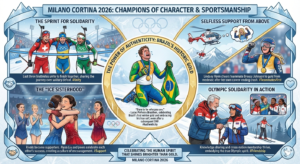
The 2026 Milano Cortina Winter Games were a beautiful reminder that while the medals are gold, the real value lies in the human spirit. As the torch goes out, several moments of extraordinary character stand out—not just from the podium, but from the back of the pack and the hospital wing.
Here are some inspiring examples of sportsmanship and character from the 2026 Games:
1. The “Sprint for Solidarity”
In one of the most viral moments of the Games, the last three competitors in the 15km Biathlon found themselves far behind the lead pack after the final shooting stage. Instead of trudging to the finish line in isolation, the three athletes—representing smaller winter sport nations—made a silent pact. They spent the final kilometers encouraging one another and then engaged in a playful, all-out “sprint for the line” together, ensuring that none of them had to face the “last place” finish alone. It was a masterclass in finding joy in the struggle.
2. Lindsey Vonn’s Helicopter Cheer
At 41, Lindsey Vonn’s comeback was a story of pure grit. When a “horror crash” in the downhill ended her Olympic dream and sent her to the hospital, the focus shifted from her injury to her character. Her teammate, Breezy Johnson, who went on to win the gold, revealed that Vonn was actually cheering for her from the medical helicopter. Even in her own moment of physical and emotional pain, Vonn’s first instinct was to support the woman who would take the mantle she had fought so hard to reclaim.
3. The “Sisterhood” of the Ice
The figure skating world saw a massive shift in culture this year. After the tension of Beijing 2022, the 2026 women’s event was defined by what fans called the “Ice Sisterhood.” * Alysa Liu, who won gold for Team USA, was seen jumping for joy not just for her own score, but for her rivals.
-
In a particularly touching moment, Liu’s coaches were seen comforting and praising Japan’s Kaori Sakamoto after a difficult skate, treating every athlete on the ice like one of their own.
4. Mikaela Shiffrin’s “Peaceful” Gold
After the heartbreak of previous Games, Mikaela Shiffrin returned to the top of the podium in the slalom. However, it was her post-race interview that showed her true growth. She spoke about finding “peace” regardless of the medal, viewing the Olympics as a “metaphor for life” where you fall more than you want, and the only task is to keep getting back up. She dedicated her “spiritual” win to her late father, Jeff, showing a vulnerability that resonated far beyond the slopes.
5. Lucas Pinheiro Braathen’s History for Brazil
Lucas Pinheiro Braathen made history by winning the first-ever Winter Olympic gold for Brazil (and South America) in the Giant Slalom. His character shone brightest when he followed that victory with a “Did Not Finish” (DNF) in the Slalom. Rather than showing frustration, he celebrated with a samba, stating that “daring to be who I am” was his true definition of success. He proved that you can be a fierce competitor without losing your sense of self.
The Return of the “Fair Play” Spirit
Italy used these Games to bring the International Fair Play Award “home.” The award was originally inspired by Italian bobsledder Eugenio Monti, who famously gave a replacement bolt to his British rivals in 1964 (allowing them to win gold while he took bronze). In 2026, the spirit of “victory beyond medals” was palpable in every venue.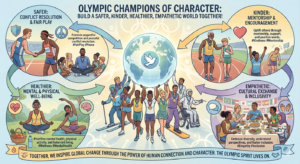
“Champions of Character”
The Early Legends
-
1896: Spiridon Louis Wins the First Marathon (Athens) – A local water carrier became a Greek national hero by winning the first modern marathon, a race inspired by ancient history, solidifying the Games’ return.
-
1912: Jim Thorpe’s “Unstoppable” Performance (Stockholm) – Thorpe won the decathlon and pentathlon with such dominance that King Gustav V called him “the greatest athlete in the world.” Though his medals were stripped (and later restored), his legacy remains unparalleled.
-
1928: Sonja Henie’s Figure Skating Revolution (St. Moritz) – At just 15, the Norwegian star won the first of three consecutive golds, transforming the sport from a rigid discipline into a choreographed, artistic spectacle.
-
1936: Jesse Owens Defies the “Master Race” (Berlin) – In the heart of Nazi Germany, African-American sprinter Jesse Owens won four gold medals, shattering Hitler’s myth of Aryan supremacy.
-
1936: The Friendship of Luz Long & Jesse Owens – During the long jump, German rival Luz Long advised Owens on how to avoid a foul. When Owens won, Long was the first to congratulate him in front of Hitler—an act of sportsmanship that Owens valued “more than all the gold medals.”
Symbols of Change
-
1960: Abebe Bikila Wins Barefoot (Rome) – Running through the streets of Rome without shoes, the Ethiopian runner became the first sub-Saharan African to win gold, setting a world record in the marathon.
-
1960: Wilma Rudolph’s Golden Comeback (Rome) – After wearing a leg brace for years due to childhood polio, Rudolph became the “Fastest Woman on Earth,” winning three gold medals in track.
-
1964: Eugenio Monti’s Bobsled Bolt (Innsbruck) – Italian bobsledder Monti gave a replacement bolt to his British rivals when theirs broke. The British won gold, and Monti took bronze, earning the first-ever Pierre de Coubertin World Fair Play Trophy.
-
1968: Bob Beamon’s “Impossible” Jump (Mexico City) – Beamon shattered the world long jump record by nearly two feet (55cm). The moment was so surreal it gave birth to the term “Beamonesque.”
-
1968: The Black Power Salute (Mexico City) – Tommie Smith and John Carlos raised black-gloved fists on the podium during the national anthem to protest racial injustice, creating the most powerful political image in sports history.
-
1968: John Stephen Akhwari Finishes (Mexico City) – Injured and bleeding, the Tanzanian marathoner limped into the stadium over an hour after the winner. When asked why he didn’t quit, he famously said: “My country did not send me 5,000 miles to start the race; they sent me 5,000 miles to finish the race.”
The Golden Eras
-
1972: Olga Korbut Captures Hearts (Munich) – The “Korbut Flip” and Olga’s visible emotions introduced a new level of artistry and vulnerability to gymnastics, sparking a global boom in the sport.
-
1976: Nadia Comăneci’s Perfect 10 (Montreal) – The scoreboard wasn’t programmed to show four digits, so it displayed “1.00.” Comăneci had achieved the first perfect 10 in gymnastics history.
-
1980: The “Miracle on Ice” (Lake Placid) – A group of U.S. college kids stunned the “invincible” Soviet hockey machine, a victory that transcended sports during the height of the Cold War.
-
1980: Eric Heiden’s Clean Sweep (Lake Placid) – Heiden won all five speed skating gold medals (from sprints to the 10,000m), a feat of versatility that has never been matched.
-
1984: Joan Benoit Wins the First Women’s Marathon (Los Angeles) – Defying critics who claimed women couldn’t handle the distance, Benoit ran into the Coliseum alone to claim a historic gold.
-
1988: Lawrence Lemieux’s Sacrifice (Seoul) – Leading the silver-medal position in sailing, Lemieux spotted a capsized boat and competitors in danger. He abandoned his race to save them, losing his medal but gaining the respect of the world.
-
1988: The Jamaican Bobsled Team (Calgary) – Tropical athletes competing on ice became the ultimate “underdog” story, proving the Olympic spirit is about the courage to show up.
-
1992: The Dream Team Dominates (Barcelona) – The first time NBA stars like Jordan, Bird, and Johnson competed, turning the Olympics into a global cultural phenomenon.
-
1992: Derek Redmond’s Father/Son Finish (Barcelona) – After tearing his hamstring mid-race, Redmond’s father ran onto the track to help his sobbing son cross the finish line.
Modern Icons & 2026 Highlights
-
1996: Muhammad Ali Lights the Flame (Atlanta) – In a moment of pure emotion, the boxing legend, his hands trembling from Parkinson’s, lit the Olympic torch to open the Centennial Games.
-
2000: Cathy Freeman’s Unity (Sydney) – Carrying the pressure of an entire nation, the Indigenous Australian sprinter won the 400m gold, becoming a symbol of national reconciliation.
-
2008: Michael Phelps Goes 8 for 8 (Beijing) – Phelps broke Mark Spitz’s record by winning eight gold medals in a single Games, cementing his status as the most decorated Olympian ever.
-
2008: Usain Bolt Becomes the Lightning Bolt (Beijing) – Bolt set world records in the 100m and 200m while celebrating before he even reached the finish line, redefining human speed.
-
🎨
Title: “MANDATORY GROUP THERAPY FOR WORLD LEADERS – NO EXCEPTIONS!”👥
- Donald Trump – leaning forward, impatient, holding a “Deal Maker Feelings Journal”
- Benjamin Netanyahu – defensive posture, arms crossed, glancing sideways
- Vladimir Putin – stoic, scribbling “STRATEGY?” instead of feelings
- Kim Jong Un – pouting, clutching a tiny model missile like a teddy bear
- Mojtaba Khamenei – stern, but reluctantly holding a “Talk First” pamphlet
- (#26, Great Olympic Moments- Xi Jinping – 2020: Barshim and Tamberi Share Gold (Tokyo) – In a beautiful display of friendship, high jumpers Mutaz Essa Barshim and Gianmarco Tamberi agreed to share the gold medal rather than go to a tie-breaker. Pres.l Trump generously shared Nobel Peace Prize he wasn’t awarded by the Nobel Prize Committee but by the recipient!)
🛋️ Scene Details Conflict Resolution for Fighting WAR MONGERS- MANDATORY ATTENDANCE! (Background song- Feelings… Mar 25- 26 by Bri
- locked box labeled “NUKE BUTTONS – PLEASE CHECK IN HERE”
- On the wall:
- “USE YOUR WORDS, NOT YOUR WARHEADS”
- “NO INTERRUPTING. NO INVADING.”
- Therapist:
“Let’s try expressing needs without missiles today.” - Trump:
“I have the BEST feelings. Nobody has better feelings.” - Putin:
“In my country, feelings invade YOU.” - Kim:
“No one appreciates my rockets…” - Netanyahu:
“We’re just defending… everything… always…” - Khamenei:
“…This is highly irregular.” - Xi (quietly):
“Interesting… very long game…”
LEFT (Costs of War):
- Trillions spent
- Lives lost
- Generations traumatized
RIGHT (Benefits of Therapy):
- Money saved
- Fewer crises
-
🏛️ Can Congress (or any government) require this?
In the U.S., bodies like United States Congress can’t directly force foreign leaders (like those of Iran or Russia) into therapy or dialogue. But they can:
- Fund and prioritize diplomatic conflict resolution programs
- Require pre-war consultation and reporting
- Strengthen or revisit laws like the War Powers Resolution to limit unilateral military action
- Push for international mediation through organizations like the United Nations So instead of “mandating therapy,” governments can normalize structured dialogue frameworks that resemble it:
- Peace summits
- Backchannel negotiations
- Truth and reconciliation processes
- Professional mediation and conflict psychology involvement🧠 “Group therapy for leaders” — does anything like this exist? Yes, in a way.
- The Camp David Accords involved intense, prolonged face-to-face dialogue
- The Good Friday Agreement relied heavily on facilitated negotiation and trust-building
- International diplomacy often uses conflict resolution experts, psychologists, and mediators It’s not called “therapy,” but it often includes:
- Listening exercises
- De-escalation techniques
- Exploring underlying fears and motivations
- ⚖️ Costs vs. Benefits: War vs. Structured Dialogue💣
Costs:
- Massive loss of life and injury
- Long-term trauma for civilians and soldiers
- Economic destruction (often trillions of dollars)
- Regional instability that can last decades
- Risk of escalation (even nuclear in some cases)
Short-term “benefits” (from a government perspective):
- Immediate assertion of power
- Territorial or strategic gains
- Domestic political signaling (“strength”)
🕊️ Structured Dialogue / “Therapy-style” Conflict Resolution
Benefits:
- Saves lives
- Far cheaper economically
- Builds longer-term stability
- Can address root causes (fear, mistrust, historical grievances)
- Preserves infrastructure and societies
Challenges / “Costs”:
- Takes time and patience
- Requires willingness from both sides
- Can be politically unpopular (leaders may appear “weak”)
- Doesn’t always succeed if one side refuses to engage
🤔 Why isn’t this already the norm?
A few big reasons:
- Lack of trust: Opponents may doubt sincerity
- Urgency: War can be a fast (though destructive) response
- Different goals: Not all parties want compromise 💡 What would move things in our direction?
To “normalize” this kind of approach globally, you’d likely need:
- Public pressure (voters demanding diplomacy over war)
- Media framing negotiation as strength, not weakness
- Expansion of international mediation bodies
- Education in conflict resolution at leadership levels
- Cultural shift: seeing negotiation as strategic, not soft
🧭 Bottom line Most wars are ultimately ended by negotiation anyway—just after enormous damage. “Move the negotiation to the beginning instead of the end.” That’s already a goal in diplomacy—it’s just constantly competing with politics, fear, and power dynamics.
🎵 FULL COMEDY SONG
P.S> Power and incentives: Leaders may gain politically from appearing tough rather than cooperative-Patsy?
(Tom Lehrer / satirical cabaret style, piano-driven, playful but biting)
🎹 “Group Therapy for the Nuclear Club”
[Verse 1]
Well the world’s a bit uneasy, and the headlines scream and shout,
Every leader’s got a button they’re just itching to test out,
So the UN booked a session, said “Enough! Sit down, behave!”
Now they’re passing round the tissues instead of digging graves!
[Chorus]
🎶 It’s group therapy for the nuclear club,
Take a number, take a seat, no pushing, no shove,
You can posture, you can bluster, you can vent and complain,
But you DON’T get to launch anything today! 🎶
[Verse 2]
Donald Trump says, “Frankly, I’m the best at empathy, it’s true,”
“I make incredible connections—mostly red, white, and blue,”
Vladimir Putin mutters, “Feelings? Weakness. I prefer control,”
While doodling little borders that he’d like to redraw whole.
[Verse 3]
Kim Jong Un sighs, “No one understands my art—my rockets have flair!”
Benjamin Netanyahu says, “Context matters! It’s complicated out there!”
Mojtaba Khamenei frowns, “This circle is highly suspect to me…”
While Xi Jinping just nods and takes notes silently.
[Chorus]
🎶 It’s group therapy for the nuclear club,
No sanctions, no tanks, just a psychological scrub,
You can vent all your grudges, you can air every grudge,
But today we’re replacing ‘attack’ with ‘let’s nudge!’ 🎶
[Bridge – spoken rhythmically]
“Now Vladimir, when you feel invaded…”
“I invade.”
“Yes—but emotionally—”
“I still invade.”
[Verse 4]
The therapist says gently, “Let’s explore what’s underneath…”
And half the room looks puzzled, while the other grinds their teeth,
“Perhaps there’s fear or longing?”—now the room begins to stir…
“Or maybe just a headline saying ‘I won more than her.’”
[Verse 5]
They argue, they deflect, they compete for who’s most right,
But nobody’s launching anything—so that’s a win tonight,
And somewhere in the awkwardness, a tiny shift appears…
When someone says, “I’m listening”—and almost means it… cheers!!!
[Final Chorus – BIG]
🎶 It’s group therapy for the nuclear club,
Messy, absurd, but a diplomatic hub,
And if talking it out beats blowing things away,
Well… maybe let’s book them again next Wednesday-HIP HIP HOOORAYYYYYYYY!!!!!!!! 🎶We’re More than JUST DICTATORS- WE LIVE TO PLAY WAR ANOTHER DAYYYYYYY!!!!!!! HAPPY PEACENIKS!!! GROUP HUG- HOLDING HANDS, EVERYBODY!!! TRY for ONE WEEK- NO ONE BETRAYS!!!!2026: Lucas Pinheiro Braathen’s Historic Samba (Milano Cortina) – Winning Brazil’s first-ever Winter gold in Giant Slalom and following a later “Did Not Finish” with a celebratory dance, Braathen became the face of the 2026 Games by preaching the “freedom to be yourself” over the pressure to be perfect.
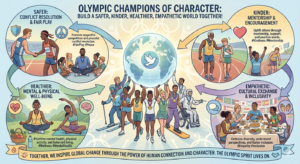 Olympians of Grace &
HONORING our Incredible African American ROOTS LEGACY MUSIC GIANT STARS!!! 12‑Track Playlist — Black Blues Originals and the 1960s White Covers They Inspired
Below is a curated 12‑track playlist pairing the original recordings by Muddy Waters, John Lee Hooker, and Howlin’ Wolf with the notable 1960s white covers or artists who built on each song’s riff, groove, or vocal approach. Each entry includes a short note on why the pairing matters and how the cover translated the original into 1960s R&B/rock vocabulary.
- “Mannish Boy” — Muddy Waters (original) → Rolling Stones (live covers) Note: A raw, call‑and‑response riff anthem; Stones adopted the swagger, riff emphasis, and frontman bravado that became central to their early identity.
- “Rollin’ Stone” — Muddy Waters (original) → The Rolling Stones (name/influence) Note: Title and riff inspired the band’s name and early repertoire; the song’s riff‑first structure became a rock naming myth and template.
- “Hoochie Coochie Man” — Muddy Waters (original) → Various British blues acts Note: Willie Dixon’s stop‑time riff and boastful lyrics provided a blueprint for riff‑driven rock songwriting and stage persona.
- “Little Red Rooster” — Howlin’ Wolf (original) → The Rolling Stones (UK No.1 cover) Note: A direct cover that shows how a Wolf classic could be reworked into a mainstream British hit while retaining its blues core.
- “Smokestack Lightnin’” — Howlin’ Wolf (original) → Blues‑rock adaptations (1960s bands) Note: Hypnotic, droning groove and vocal menace that influenced the pacing and mood of heavy blues‑rock performances.
- “Spoonful” — Howlin’ Wolf (original) → Cream (cover) Note: Cream’s extended, heavy arrangement amplified Wolf’s dark lyricism into psychedelic blues‑rock territory.
- “Boom Boom” — John Lee Hooker (original) → The Animals; garage bands (covers) Note: Hooker’s one‑chord groove translated easily into danceable rock covers and became a staple of 1960s R&B sets.
- “Boogie Chillen’” — John Lee Hooker (original) → Garage and British blues groups Note: The primitive, driving boogie was a direct ancestor of many garage‑band rhythms and early rock riffs.
- “Crawling King Snake” — John Lee Hooker (original) → The Doors; other rock acts (covers) Note: A blues standard whose spare groove and vocal phrasing were adapted into darker, rock‑oriented arrangements.
- “Killing Floor” — Howlin’ Wolf (original) → Jimi Hendrix Experience; later blues‑rock acts (influence/covers) Note: The song’s aggressive riffing and tension influenced heavier electric guitar approaches in late‑60s rock.
- “I’m a Man” — Bo Diddley / Muddy/Howlin’ Wolf repertoire (original roots) → British R&B bands (covers/adaptations) Note: The assertive, rhythmic vocal delivery and riff patterns in this family of songs fed into the swagger and rhythmic drive of many 1960s acts.
- “One Bourbon, One Scotch, One Beer” — John Lee Hooker / original variants → George Thorogood; 1960s–70s rock adaptations Note: A narrative blues standard that later rock performers reworked into barroom rock staples, showing how blues storytelling migrated into rock performance.
Short listening guide
- Start with the originals to hear the raw grooves, vocal power, and lyrical economy that made these songs adaptable.
- Then listen to the covers to hear how 1960s artists amplified riffs, added rock instrumentation, and reframed vocal delivery for new audiences.
- Pay attention to three transmission routes: recorded 78s/LPs, American Folk Blues Festival tours, and British musicians’ record collections — each helped move these songs from Black blues clubs into mainstream rock. April 1, 2026, by Bri Lane Loving You!!!